Learn the difference between static and dynamic QR codes, their pros, use cases, and which one is best for your needs.
QR codes may look simple, but choosing the right type can make a big difference in how useful they are over time.
Most people only think about design or where the QR code will be placed. But the real decision starts earlier: should you use a static QR code or a dynamic QR code? That one choice affects whether you can edit the destination later, track scans, update campaigns, or keep using the same printed code even when your content changes.
If you have ever wondered about static vs dynamic QR code options, you are not alone. It is one of the most common questions beginners ask, and for good reason. Both types can look almost identical, but they work very differently behind the scenes. Understanding the difference between static and dynamic QR codes can save you time, money, and a lot of frustration later.
In this guide, we will break it down in simple terms. You will learn what each QR code type does, when to use it, the pros and cons of each option, common mistakes to avoid, and how to choose the best one for your needs. If you are completely new to QR codes, you may also want to read our guide on how to create a QR code for free.
What Is a QR Code?
A QR code is a scannable code that stores information in a format smartphones can read instantly. When someone scans the code with their phone, it performs an action such as opening a website, showing a menu, downloading a file, saving contact details, or joining a WiFi network.
That convenience is exactly why QR codes are used everywhere now, from restaurant tables and product packaging to posters, business cards, invoices, and event signs.
But not all QR codes work the same way. The biggest difference comes down to whether the code is static or dynamic.
Why the Type of QR Code Matters
At first, it may seem like all QR codes do the same job. You create one, people scan it, and they land where you want them to go. But the type of QR code you choose affects what happens after the code is created.
For example, what if you need to update the link later? What if you want to see how many people scanned the code? What if the QR code is already printed on flyers, posters, menus, or packaging?
Those are the situations where understanding QR code types becomes important. The right choice depends on whether you need simplicity or flexibility.
What Is a Static QR Code?
A static QR code contains fixed information. Once it is created, the content inside it cannot be changed.
If a static QR code links to a website URL, that exact URL stays embedded in the code permanently. If you later change the destination page or decide to use a different link, the old QR code will not update. You would need to generate a brand-new code.
How Static QR Codes Work
With a static code, the destination data is stored directly in the QR code pattern itself. When someone scans it, the phone reads that built-in information and opens it immediately.
Because there is no editable redirect layer, static codes are usually simpler and often available through a free QR tool.
When a Static QR Code Makes Sense
A static code is a good option when the content is not likely to change. It works best for simple, permanent uses where flexibility is not a priority.
- homepages
- basic contact information
- personal portfolios
- permanent information pages
- simple one-time uses
Pros of Static QR Codes
Easy to create: Static QR codes are straightforward and beginner-friendly.
Often free: Many platforms let users generate them without cost.
Good for permanent content: If the destination will stay the same, a static code can do the job well.
Cons of Static QR Codes
Not editable: Once the code is generated, the content cannot be changed.
Limited flexibility: If you update your website structure or campaign URL, the code becomes outdated.
Usually no tracking: Static QR codes typically do not offer scan analytics or performance data.
What Is a Dynamic QR Code?
A dynamic QR code works differently. Instead of storing the final destination directly inside the code, it points to a short redirect URL. That redirect can be updated later, which means the destination can change without needing to replace the QR code itself.
This is what makes a dynamic code so useful for businesses, marketers, and anyone managing campaigns that may change over time.
How Dynamic QR Codes Work
When someone scans a dynamic QR code, their device first goes through a short link or redirect. That redirect then sends them to the final destination.
Because the destination lives behind the redirect, it can be edited later. So if the code is already printed on 10,000 brochures, you can still update the landing page without reprinting anything.
When a Dynamic QR Code Makes Sense
A dynamic code is ideal when you need flexibility, tracking, or the option to update content later.
- marketing campaigns
- restaurant menus that change
- seasonal promotions
- event pages
- editable product links
- long-term print materials
Pros of Dynamic QR Codes
Editable: You can change the destination without changing the printed code.
Trackable QR code: Many dynamic systems include analytics such as number of scans, time, location, and device type.
Better for long-term use: If your content changes, the code can stay the same.
More campaign-friendly: A dynamic code is more practical for testing, tracking, and managing promotions.
Cons of Dynamic QR Codes
May require a paid plan: Some tools charge for advanced dynamic features.
Can depend on a platform: Because the redirect is managed through a service, the code may depend on that system staying active.
More setup: Dynamic codes can involve accounts, dashboards, or settings that beginners may not need for simple use cases.
Static vs Dynamic QR Code: The Core Difference
The easiest way to understand the difference between static and dynamic QR codes is this:
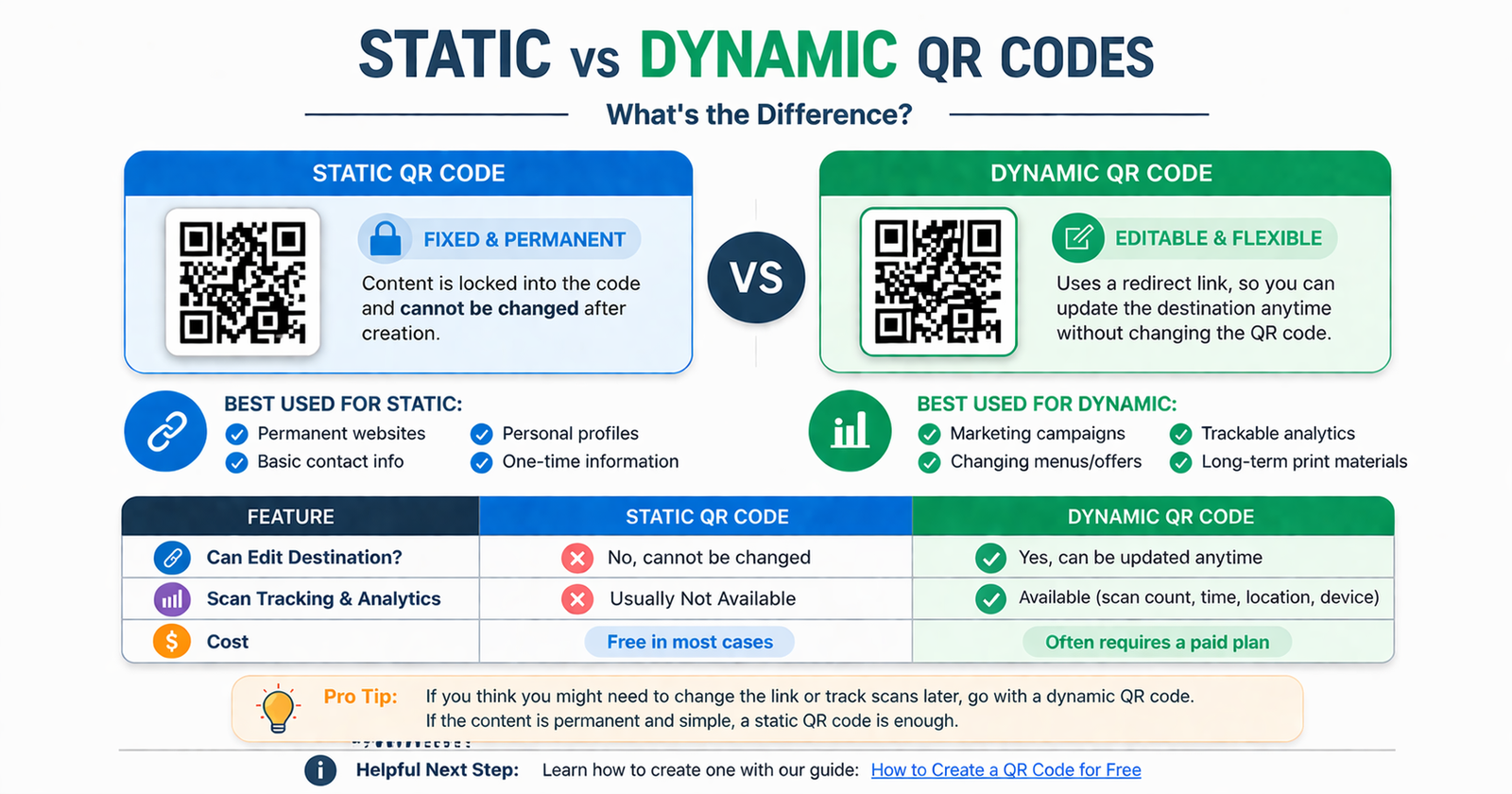
A static QR code is fixed. A dynamic QR code is editable.
That one difference affects everything else, including flexibility, analytics, long-term usability, and campaign management.
Static QR Code
- fixed destination
- cannot be edited later
- often free
- best for permanent content
- usually no scan tracking
Dynamic QR Code
- editable destination
- can be updated later
- often includes analytics
- best for campaigns and changing content
- may require an account or subscription
Which One Should You Choose?
The right choice depends on how you plan to use the code.
Choose a Static QR Code If:
- the content will not change
- you want a simple free option
- you do not need analytics
- you are using the code for a basic personal or small business purpose
Choose a Dynamic QR Code If:
- you may need to update the destination later
- you want scan tracking
- you are printing the code on long-term materials
- you are running marketing campaigns
- you want more control and flexibility
If you are still unsure, ask yourself one simple question: Will I ever need to change this QR code’s destination after it is printed or shared?
If the answer is yes, dynamic is usually the better choice.
Real-World Examples
Example 1: Business Card
If your QR code links to a personal portfolio or LinkedIn profile that is unlikely to change, a static QR code may be enough.
Example 2: Restaurant Menu
If your menu changes regularly, a dynamic QR code is much more practical because you can update the destination page without replacing table cards or signage.
Example 3: Product Packaging
If a QR code on packaging leads to product instructions that might move or be updated later, dynamic gives you more control.
Example 4: Flyer for a Temporary Offer
If you are running a short campaign and want to track how many people scanned the code, a trackable QR code is the better option, which usually means using dynamic QR technology.
Common Mistakes to Avoid
Choosing Static for a Changing Campaign
This is one of the most common mistakes. A static code may look fine at first, but if the linked page changes, the code becomes outdated.
Paying for Dynamic Features You Do Not Need
Not every project needs analytics or editability. For a permanent link, a static code may be enough.
Not Thinking Ahead
Many people choose a QR code type based only on what they need today. It is smarter to think about whether the destination, offer, or campaign may change later.
Assuming All QR Codes Are the Same
They are not. Visually they may look similar, but functionally they can behave very differently. That is why understanding QR code types matters before you generate one.
Best Practices for Both Static and Dynamic QR Codes
Always Test Before Publishing
No matter which type you use, scan the QR code on multiple devices before printing or sharing it publicly.
Use a Mobile-Friendly Destination
Most people scan QR codes with phones, so the landing page should load quickly and display properly on mobile.
Add a Clear Call to Action
Tell people what they will get when they scan. For example, “Scan to view menu” or “Scan to claim offer” works much better than showing a code with no explanation.
Keep the Experience Relevant
The page behind the code should match the context around it. A poster for a special deal should not send users to a generic homepage.
FAQ
What is the difference between static and dynamic QR codes?
The main difference is that a static QR code cannot be edited after creation, while a dynamic QR code can usually be updated later without changing the printed code.
Is a static QR code free?
In many cases, yes. Static QR codes are often available through free tools and are commonly used for basic, permanent content.
What is a dynamic QR code used for?
A dynamic QR code is often used for marketing, editable campaigns, menus, events, and situations where tracking or link updates are important.
Can I track scans with a static QR code?
Usually not. If you want a trackable QR code, dynamic QR options are generally the better choice.
Which QR code type is better for businesses?
It depends on the use case. Static codes are fine for fixed information, but dynamic codes are usually better for business campaigns, analytics, and long-term flexibility.
Can a static QR code become outdated?
Yes. If the destination changes or the link stops working, the static code cannot be edited and will need to be replaced.
Conclusion
When people compare static vs dynamic QR code options, the choice really comes down to one thing: do you need flexibility after the code is created?
If the answer is no, a static code may be the simplest and most cost-effective option. If the answer is yes, a dynamic code gives you much more control, especially for marketing, changing content, and long-term print use.
Understanding the difference between static and dynamic QR codes helps you avoid common mistakes and choose the format that actually fits your goal. A QR code may look small, but the right setup can make a big difference in how useful it is over time.
If you are ready to build one, QRcodesgenerate.com makes it easy to generate the right type of QR code for your project and create a smoother experience for the people scanning it.