At first glance, most QR codes look the same. A customer scans, a page opens, and the interaction feels simple. But for businesses, what happens behind that scan matters a lot. If you ever need to update a link, track campaign performance, change a promotion, or keep printed materials useful over time, the type of QR code you use can make a huge difference.
That is why more brands are paying attention to the benefits of dynamic QR codes for businesses. Unlike basic fixed codes, dynamic QR codes offer flexibility. They let businesses change destinations, improve campaigns, and manage QR-based experiences without having to reprint everything from scratch.
For a small business, that can save time and money. For a growing brand, it can make marketing more adaptable. And for teams using QR codes across packaging, signs, menus, events, business cards, and promotions, it can make the entire system easier to manage.
In this guide, we will break down what dynamic QR codes are, why businesses use them, where they help most, and how they compare with fixed QR code options in real-world use.
What Is a Dynamic QR Code?
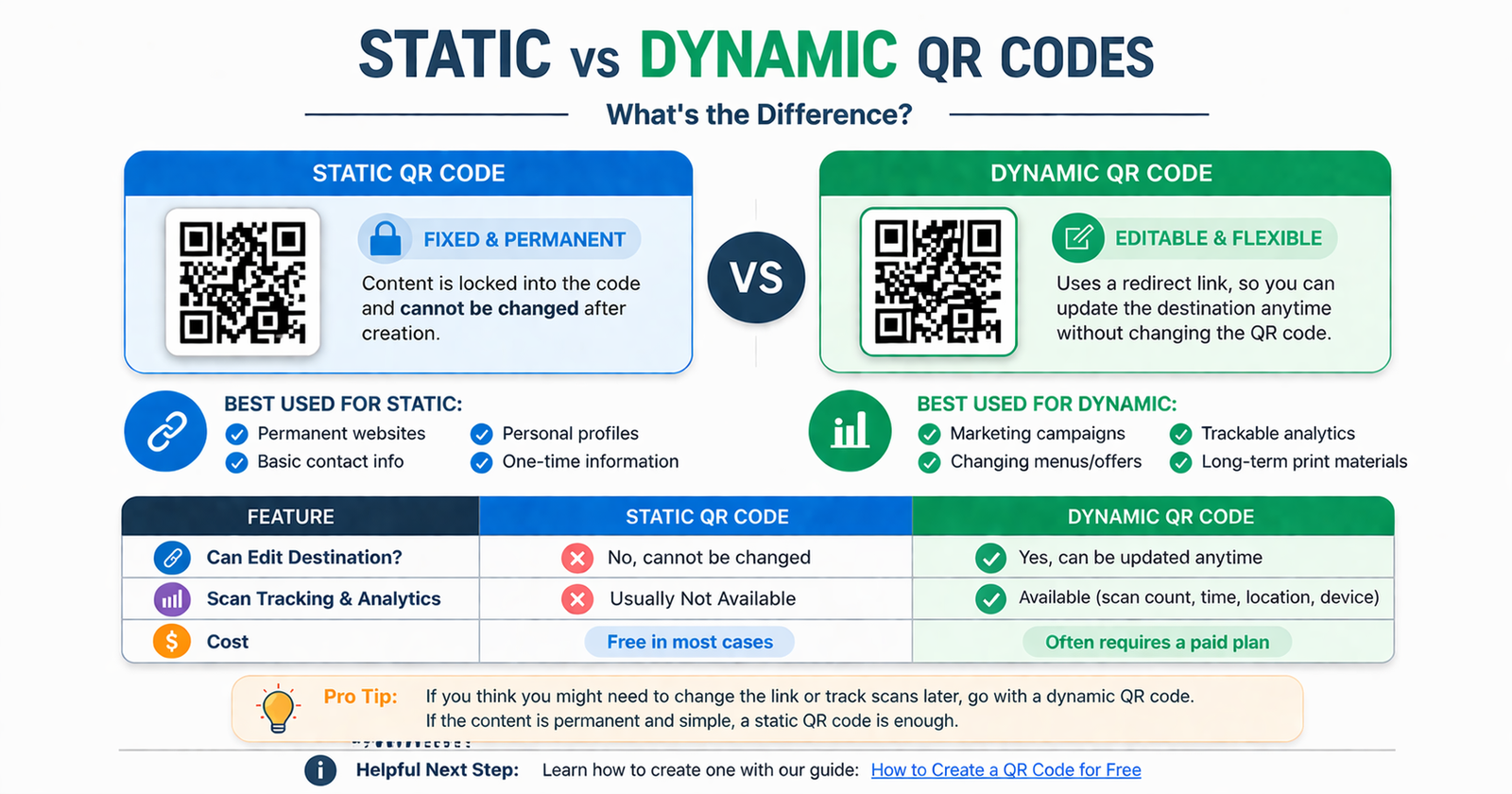
A dynamic QR code is a QR code whose destination can usually be updated after the code has already been created and shared. Instead of storing the final link directly inside the QR pattern, it uses a redirect or short link that points to the real destination behind the scenes.
That means the visible QR code can stay the same even if the destination changes later.
For businesses, this matters because marketing materials, packaging, posters, and printed assets often stay in use for weeks or months. If the linked page changes, a static code can quickly become outdated. A dynamic code gives you more flexibility.
If you want the broader foundation first, it helps to understand the full difference between static vs dynamic QR codes before choosing one for business use.
Why Businesses Prefer Dynamic QR Codes
Businesses rarely want their QR codes to stay locked forever. Campaigns change. URLs get updated. Seasonal promotions end. Product pages move. Menus change. Booking links shift. A code that cannot adapt can become a problem surprisingly fast.
That is where dynamic QR codes become valuable. They are built for flexibility, which makes them especially useful for business environments where content changes over time.
Top Benefits of Dynamic QR Codes for Businesses
1. You Can Change the Destination Without Replacing the Code
This is the biggest advantage.
With a dynamic QR code, you can usually change where the code leads after it has already been printed or published. That means the same code on a flyer, brochure, menu, product label, or sign can keep working even if the landing page changes later.
This is especially useful when:
- a campaign page expires
- a product URL changes
- a booking page is replaced
- a menu is updated
- a promotion ends and a new one begins
Instead of reprinting materials, you simply update the destination behind the code.
2. Better Long-Term Value for Printed Materials
Businesses spend real money on printed assets. Flyers, menus, business cards, posters, packaging, inserts, and displays are not something you want to replace every time a URL changes.
Dynamic QR codes help protect that investment because they keep the printed code useful for longer.
This makes them especially valuable for:
- business cards
- restaurant table displays
- product packaging
- event signage
- storefront posters
- brochures and catalogs
For example, a business printing cards in bulk may not want its QR code tied to one page forever. That is one reason they are often a smarter choice for materials like business cards with QR codes, where long-term flexibility matters.
3. Easier Campaign Management
Marketing campaigns rarely stay frozen. A business may want to test a new landing page, swap an offer, update a form, or redirect traffic to a more relevant page based on performance.
Dynamic QR codes make that much easier because the code does not need to be recreated every time the campaign evolves.
This gives businesses more room to adapt without disrupting the customer experience. A printed poster can continue to work while the campaign behind it improves.
4. Better for Promotions and Seasonal Offers
Promotions are one of the best use cases for dynamic QR codes. Businesses often run limited-time offers, seasonal discounts, event campaigns, or launch pages that only stay relevant for a short period.
With a dynamic code, you can update the offer later without changing the printed asset. A code used for a spring sale can later send people to a summer promotion if the materials are still circulating.
This is one of the main reasons dynamic codes work so well in marketing campaigns, where flexibility after launch can make a major difference.
5. Cleaner Business Operations
Dynamic QR codes help reduce operational headaches. Instead of managing multiple outdated codes across different materials, businesses can keep control through one code that remains active while the destination changes as needed.
That creates a cleaner workflow for teams handling marketing, restaurant operations, customer engagement, retail packaging, service booking, or event promotion.
It also reduces the chance of leaving old broken QR codes in public-facing materials.
6. Useful for Menus, Ordering, and Changing Content
Some industries update content all the time. Restaurants change menu items. Cafés rotate specials. Salons update service pages. Retailers change product availability. Event businesses update schedules and sign-up pages.
Dynamic QR codes are ideal in those cases because they support ongoing changes without requiring new printed codes each time.
That is especially helpful for hospitality and food businesses using QR-based menus, where the destination may need updates more often than people expect.
7. More Control Over the Customer Journey
Businesses do not always know the best final destination from day one. After a campaign runs for a while, it may become obvious that users respond better to a different page, a shorter form, a clearer offer, or a better mobile experience.
Dynamic QR codes give businesses the option to improve that journey over time.
Instead of accepting poor performance because the code is already printed, you can refine the path behind it.
8. Better for Multi-Channel Marketing
Businesses often use QR codes across more than one channel. The same campaign might appear in-store, on packaging, on flyers, at events, or in direct mail.
A dynamic code makes it easier to manage that broader strategy because it gives you room to adjust the linked experience without having to rebuild every asset from scratch.
This is especially useful for businesses trying to connect offline marketing with online action in a more organized way.
9. Helps Avoid Broken or Outdated Links
One of the biggest problems with fixed QR codes is that once the destination becomes outdated, the QR code loses value immediately. A product page might be removed. A form might expire. A campaign page might be replaced. A booking link might change.
Dynamic QR codes reduce that risk because you can redirect the code to a working destination instead of leaving customers with a broken experience.
That matters for trust. A QR code that leads nowhere makes a business look careless.
10. More Practical for Growing Businesses
As a business grows, it usually needs more flexibility, not less. Links change, offers evolve, service pages expand, and customer journeys become more refined.
Dynamic QR codes fit that reality better than fixed codes because they grow with the business. They are often the better choice when the company wants room to adapt without replacing assets constantly.
Where Dynamic QR Codes Help Businesses Most
Dynamic QR codes can be useful across many business types, but they are especially valuable where content or campaigns change regularly.
Restaurants and Cafés
Menus, specials, promotions, and ordering pages often change. Dynamic QR codes help restaurants keep table signage and printed displays relevant without reprinting every update.
Retail and Product Packaging
Product pages, offers, tutorials, and landing pages may shift over time. Dynamic codes keep packaging more flexible.
Service Businesses
Booking pages, service lists, quote forms, and contact funnels often change as the business refines its process.
Events and Promotions
Event pages, registration links, schedules, and campaigns are rarely permanent, which makes dynamic codes especially practical.
Small Businesses
Small businesses benefit because they often need flexible tools without wasting money on reprints or outdated materials. In many cases, they fit naturally into the broader set of QR code uses for small businesses.
Dynamic QR Codes vs Static QR Codes for Businesses
Static QR codes still have their place. They can work well for simple permanent destinations that are unlikely to change.
But when flexibility matters, dynamic codes are usually the better business tool.
Static QR Codes
- fixed destination
- cannot usually be edited later
- good for permanent pages
- simpler for one-time use
Dynamic QR Codes
- destination can usually be updated
- better for campaigns and changing content
- more practical for long-term printed assets
- better suited to evolving business needs
If a business expects even a small chance that the destination may change later, a dynamic code is often the safer choice.
Best Practices When Businesses Use Dynamic QR Codes
Choose a Mobile-Friendly Destination
Most scans happen on phones, so the page behind the QR code must work smoothly on mobile.
Use Clear Calls to Action
Tell people what they will get when they scan. Examples include “Scan to View Menu,” “Scan to Book Now,” or “Scan to Claim Offer.”
Keep the Code Easy to Scan
Good contrast, enough white space, and a practical size matter more than flashy design.
Plan for Future Updates
The real power of a dynamic code is flexibility, so think ahead about how the destination may need to change over time.
Test Before Printing or Publishing
Always scan the code on multiple devices before using it publicly, even if the setup seems correct.
Common Mistakes Businesses Should Avoid
Using Fixed Codes for Changing Content
This is one of the most common mistakes. Businesses print a code for a page that later changes, then realize the code cannot adapt.
Sending Users to Vague Pages
Even with a dynamic code, the experience should still be relevant. The destination should match the context of the scan.
Ignoring Long-Term Usage
If printed materials will remain in circulation for months, flexibility matters more than many businesses first realize.
Overdesigning the QR Code
Branding matters, but scannability comes first.
FAQ
What are the main benefits of dynamic QR codes for businesses?
The biggest benefits are flexibility, easier updates, better long-term value for printed materials, fewer reprints, and smoother campaign management.
Why are dynamic QR codes better for marketing?
They are often better because campaigns change over time. Businesses may want to update offers, landing pages, or promotions without replacing the printed QR code.
Are dynamic QR codes better than static QR codes?
Not always, but they are usually better when the destination may change or when the code will be used in long-term business materials.
Can dynamic QR codes help small businesses?
Yes. They can save time, reduce wasted print costs, and give small businesses more flexibility as their content and promotions change.
Where should businesses use dynamic QR codes?
They work well on menus, packaging, flyers, posters, business cards, event materials, signage, brochures, and marketing assets that may stay in use for a while.
Do dynamic QR codes work for websites and booking pages?
Yes. They are especially useful for website links, booking pages, campaign landing pages, and offers that may need to be updated later.
Conclusion
The biggest benefits of dynamic QR codes for businesses come down to flexibility and control. They help businesses keep QR codes useful even when pages, offers, or campaigns change, which makes them far more practical for real-world operations than many fixed codes.
For businesses using QR codes across print, packaging, menus, promotions, or customer journeys, that flexibility can save time, reduce waste, and improve the experience for both the business and the customer.
A QR code may look simple, but the right type can have a big impact. When a business wants room to adapt, dynamic QR codes are often the smarter choice.